

Do I Need Conduit for a Subpanel? Indoors, Outdoors and Underground
Do I need conduit for a subpanel? Not always. Inside a house, a subpanel feeder can usually be NM or SER cable, with no conduit. Outdoors, underground and anywhere the wire could be damaged, you need conduit or a cable rated for that location. Underground, conduit is the smart choice even when direct burial cable is allowed.
Key Takeaways
- Dry indoor runs: NM or SER cable, no conduit needed.
- Exposed in a garage where it can be hit: protect it, often with conduit.
- Outdoors and underground: conduit, or UF and USE cable rated for burial.
- PVC conduit needs 18 inches of cover. Direct burial cable needs 24.
- Where wire rises out of the ground, it needs conduit up to 8 feet.
- Conduit lets you upsize the feeder later without digging.
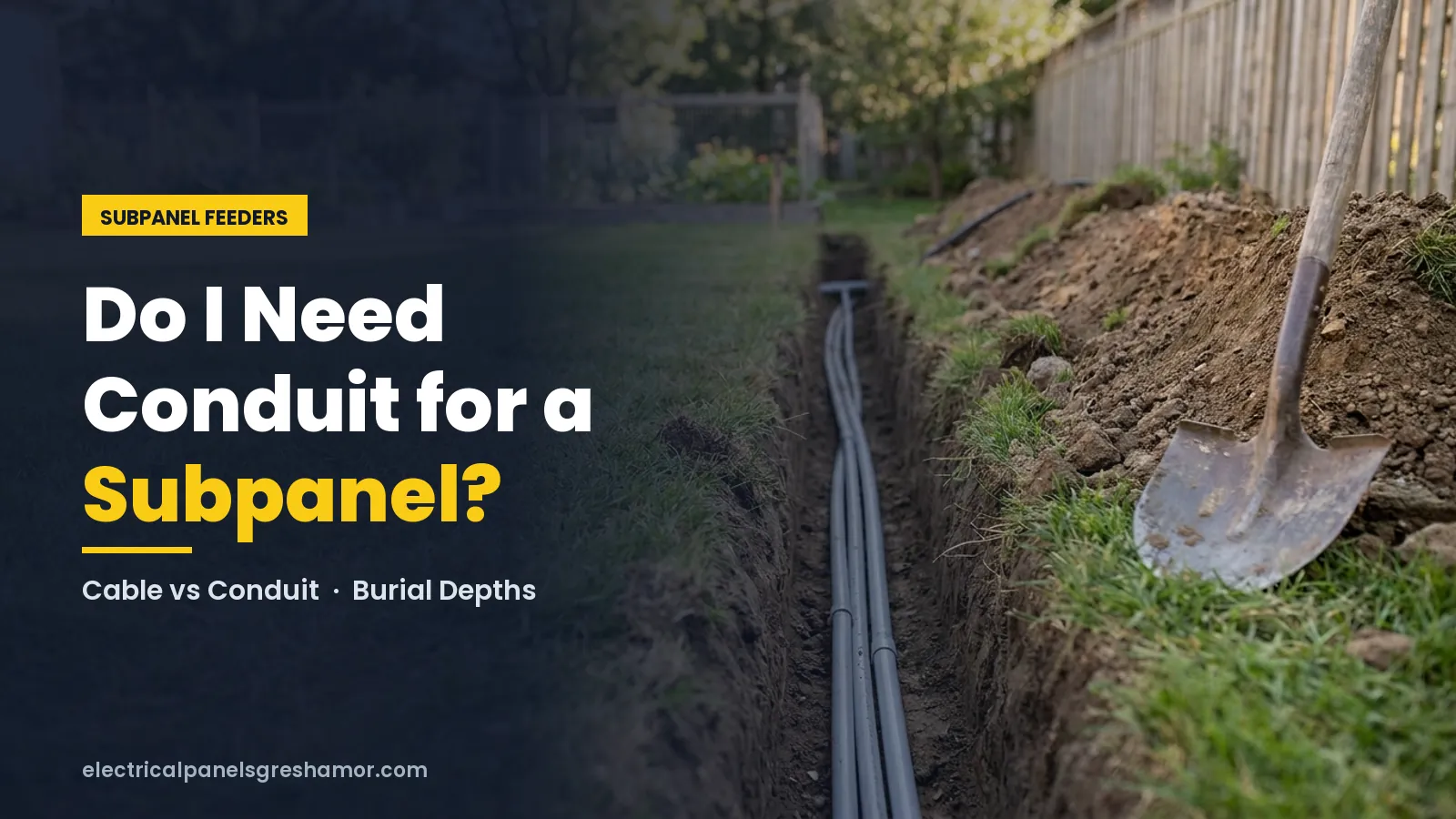
Conduit is the gray or metal pipe that wires run through. It protects them from damage, water and sunlight. It also costs more and takes longer to install than cable. So people want to know when they can skip it.
The NEC answers it by location. Where the feeder runs decides the wiring method. Here is the breakdown for a typical Gresham home, from the basement to the backyard.
Is Conduit Required for a Subpanel Feeder?
Conduit is required when the feeder runs in a place cable is not allowed or needs protection. In finished, dry indoor spaces, cable is fine.
| Feeder route | Conduit needed? |
|---|---|
| Inside walls, joists or attic | No. NM or SER cable is fine |
| Unfinished basement along joists | No, if supported and not low |
| Exposed on a garage wall | Protection required where subject to damage |
| Outdoor wall surface | Yes, or outdoor rated cable |
| Underground to a detached building | Conduit or direct burial cable |
| Rising out of the ground | Yes, conduit to 8 feet above grade |
Do You Need Conduit for an Indoor Subpanel?
Usually not. NM cable like 6/3 with ground, or 4 conductor SER, is allowed in dry indoor locations in homes.
NM cable is the standard for house wiring. It can run through bored holes in studs and joists. It must be stapled within 12 inches of the panel and every 4.5 feet along the run.
The exception is physical damage. Garage walls are the classic case. A cable running across a garage wall at bumper height needs protection. Many electricians use a short length of conduit or run it inside the wall instead. Your inspector decides what counts as "subject to damage."
Do You Need Conduit for an Outdoor or Detached Subpanel?
Outdoors you need either conduit with wet rated wire, or a cable rated for outdoor and burial use like UF or USE. Above grade, conduit is required where cable is exposed to damage.
Any conductor in outdoor conduit counts as being in a wet location. That means THWN-2 or XHHW-2 wire, not plain THHN. Most THHN sold today is dual rated THHN/THWN-2. Check the print on the jacket.
UF cable can be buried directly. It is cheaper but hard to work with, and large UF feeders are stiff. Past 60 amps, most electricians pull individual wires in conduit. If the run ends at a panel in a separate building, remember the 4 wires and the ground rods. See does a sub panel require 4 wires and ground rods for a detached garage.
How Deep Does Subpanel Conduit Need to Be Buried?
Under NEC Table 300.5, PVC needs 18 inches of cover, rigid metal conduit 6 inches and direct burial cable 24 inches, in a typical residential yard.
| Wiring method | Minimum cover |
|---|---|
| Rigid or intermediate metal conduit | 6 inches |
| PVC conduit | 18 inches |
| UF or USE direct burial cable | 24 inches |
| Under a driveway | 18 inches for all methods |
| 120V, 20A max, GFCI protected residential circuit | 12 inches |
Depth is measured to the top of the conduit or cable. Put warning tape about 12 inches above direct buried conductors. And call 811 before you dig. In Oregon, it is the law.
Which Conduit Type Is Best for a Subpanel?
Schedule 40 PVC
The go to for underground runs. Cheap, glued joints, no rust.
Schedule 80 PVC
Thicker wall. Use where it rises out of the ground and could be hit.
EMT
Thin metal tubing for indoor and garage runs. Can act as the ground path.
Rigid Metal
Toughest option. Shallow burial allowed. Costs the most.
Use sweeps, not tight elbows, on long underground runs. Big feeder wire is hard to pull around sharp bends. Keep the total bends between pull points at 360 degrees or less.
Why Use Conduit Even When It Is Not Required?
- Upgrade the feeder later without digging a new trench
- Replace damaged wire by pulling new wire through
- Shallower trench for PVC than for direct burial cable
- Protects against shovels, roots and rodents
The trench is the expensive part. Many owners run 1.5 or 2 inch PVC even for a small feeder. When the shed becomes a shop, or the garage needs an EV charger, they just pull bigger wire. Planning a garage panel? Read do I need a subpanel in my garage. Panel at the house out of room? Ask about a Gresham panel upgrade.
How Do You Size Conduit for a Subpanel Feeder?
Conduit size depends on the number and size of wires inside. NEC Chapter 9 limits fill to 40 percent of the conduit's area for three or more wires.
That 40 percent rule leaves room for the wires to slide during the pull and for heat to escape. Overfilled conduit is hard to pull and can damage insulation. Most residential feeders land in the 1 inch to 2 inch range.
| Feeder (4 copper THWN-2 wires) | Common PVC size |
|---|---|
| 40A, 8 AWG | 3/4 inch, 1 inch for easy pulling |
| 60A, 6 AWG | 1 inch |
| 100A, 3 AWG | 1.25 inch |
| 100A, 1 AWG aluminum | 1.5 inch |
These are common choices, not a substitute for the fill tables. When in doubt, go one size up. The cost difference is small, and the next upgrade is easier.
FAQ
Can I run Romex in conduit underground?
No. NM cable is not rated for wet locations, and underground conduit is always wet.
What size conduit do I need for a 60 amp subpanel?
Often 1 inch PVC for 6 AWG copper wires, but check NEC fill tables. Many installers go bigger for easy pulling.
Can I bury UF cable without conduit?
Yes, at 24 inches of cover, with conduit where it rises out of the ground.
Does conduit need a ground wire inside?
PVC does. Metal conduit can serve as the ground, but most electricians still pull a ground wire.
Do I need conduit inside a detached garage?
Only where the wiring is exposed to damage, or if the walls are open and the inspector requires protection.