

Why Does an Electrical Panel Make a Buzzing Noise? Normal vs Dangerous
Why does an electrical panel make a buzzing noise? A very faint, steady hum can come from normal magnetic vibration under heavy load. A loud buzz, crackle or sizzle is different. It usually means a loose connection, an overloaded or failing breaker, or arcing, and arcing creates heat. If the buzz comes with warmth, a burning smell or flickering lights, treat it as urgent.
Key Takeaways
- A soft hum you can barely hear with your ear near the panel can be normal.
- Loud, rising or crackling buzzing is not normal.
- Loose wires, failing breakers and overloads cause most buzzing.
- Arcing inside a panel is a fire risk.
- Heat, smell or burn marks mean call an electrician today.
- Never remove the inner panel cover to look yourself.
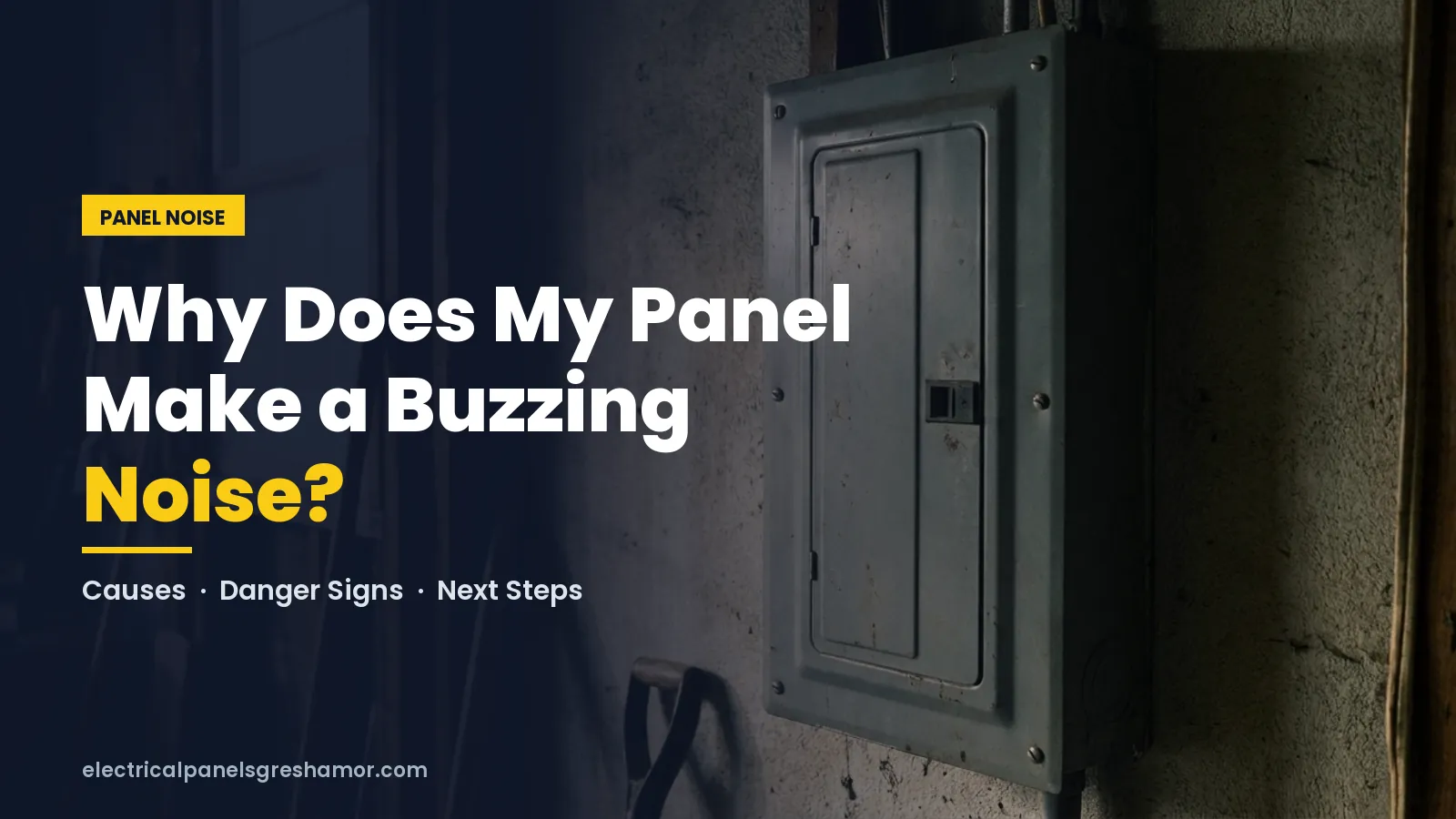
Most people never hear their panel. It sits in the garage or basement and stays quiet for years. So when it starts buzzing, it gets your attention fast.
That is the right reaction. Electricity at the panel moves through bars, lugs and breakers clamped tight together. When something loosens or fails, the noise is often the first warning you get.
Is It Normal for an Electrical Panel to Buzz?
A very faint hum under heavy load can be normal. A buzz you can hear across the room, or one that crackles or changes, is not normal.
Alternating current makes magnetic fields that rise and fall 120 times a second. Metal parts in breakers and the panel can vibrate slightly in that field. Under a heavy load like an EV charger or electric heat, a soft hum may appear. It should be steady and quiet.
Use this test. Can you hear it from a few feet away with the door closed? Does it crackle, pop or sizzle? Does it get louder when something turns on? If yes to any, it needs a look.
What Causes an Electrical Panel to Buzz?
| Cause | What is happening |
|---|---|
| Loose wire on a breaker | Current jumps a tiny gap, vibrating and heating |
| Breaker not seated on the bus | Poor contact arcs at the clip |
| Failing breaker | Worn internals vibrate or arc |
| Overloaded circuit | Breaker strains near its trip point |
| Loose main lugs | Big current through a weak joint |
| Corrosion or moisture | Damp contacts arc and corrode further |
The common thread is resistance. A tight connection has almost none. A loose or corroded one has more. More resistance means heat and vibration. In damp garages and basements across the Portland area, corrosion adds to it over time.
When Is a Buzzing Panel Dangerous?
When the buzz comes with heat, a burning or fishy smell, flickering lights, scorch marks or breakers that trip or will not reset.
- Panel door or breakers warm to the touch
- Burning plastic or fish like smell
- Crackling, popping or sizzling sounds
- Lights flicker when the buzzing gets louder
- Brown or black marks on breakers or the cover
These point to arcing. Arcs can reach thousands of degrees at the point of contact. They melt insulation and can ignite nearby material. A fishy smell often comes from heated plastic or insulation. Our guide on why an electrical panel smells like fish goes deeper.
What If Only One Breaker Is Buzzing?
Then the problem is likely that breaker, its wire or its bus connection. Turn that circuit off if you can and have it checked.
Put your ear near the panel door, not on it. A single breaker buzzing often means a loose wire on its screw, or a worn breaker that no longer seats tight. A breaker that buzzes under load and trips after a while points to an overloaded circuit. See why a breaker trips after 10 minutes.
Replacing a single breaker is a fast, low cost repair. But the bus clip it sat on needs a check too. A burned bus stab can damage a new breaker as well.
What Should You Do About a Buzzing Panel?
Check for Danger
Heat, smell or smoke? Turn off the main if safe and call for help now.
Reduce Load
Turn off big loads like heaters and chargers. Listen if it fades.
Note the Details
Which breaker? When does it start? Photos of the panel label help.
Call an Electrician
They test, tighten and replace parts safely with the panel open.
Do not take off the inner cover. The main lugs stay live even with the main breaker off. Panel repairs are best left to a licensed electrician.
What Does Fixing a Buzzing Panel Cost?
| Repair | Rough range |
|---|---|
| Tighten connections, service call | $150 to $350 |
| Replace one breaker | $150 to $400 |
| Repair bus or main lugs | $400 to $1,200 |
| Replace the panel | $1,500 to $5,500 |
Planning ranges, not quotes. If the panel is old or a brand with known problems, replacement may be the safer call. See should a 50 year old electrical panel be replaced.
How Can You Prevent Panel Buzzing?
Keep connections tight, loads balanced and the panel dry. Most buzzing starts small and grows over years.
Connections loosen slowly. Copper and aluminum expand when they carry current and shrink when they cool. Thousands of these cycles can work a screw loose. Aluminum branch wiring, used in some homes built in the late 1960s and early 1970s, is especially prone to this. A periodic check catches it before it arcs.
- Have the panel inspected every few years, or when buying a home
- Ask for a thermal scan, which shows hot connections without opening anything live
- Spread heavy loads across circuits instead of stacking them
- Fix roof, gutter or siding leaks near the service entrance
- Keep storage at least 3 feet clear in front of the panel
Clear working space is also a code rule under NEC 110.26. It lets an electrician work safely and keeps flammable items away from a panel that might overheat. In garages, that means no shelves or boxes stacked in front of the door.
A clicking sound is a related warning. See why an electrical panel makes a clicking sound.
FAQ
Can a buzzing panel catch fire?
Yes, if the buzzing comes from arcing or a loose connection. Heat builds until insulation or nearby material ignites.
Why does my panel buzz only at night?
Night often brings heavy loads like heaters, or the house is just quieter. Check which loads run when it buzzes.
Does a buzzing breaker always need replacing?
Not always. A loose wire may only need tightening. A worn or heat damaged breaker should be replaced.
Why does my panel buzz when it rains?
Moisture can reach a panel through conduit or a leaking meter base. That is serious and should be checked soon.
Can I spray contact cleaner in my panel?
No. Panel work needs the power off and a licensed electrician. Sprays do not fix loose or damaged parts.